Illustrative editorial image generated with AI.
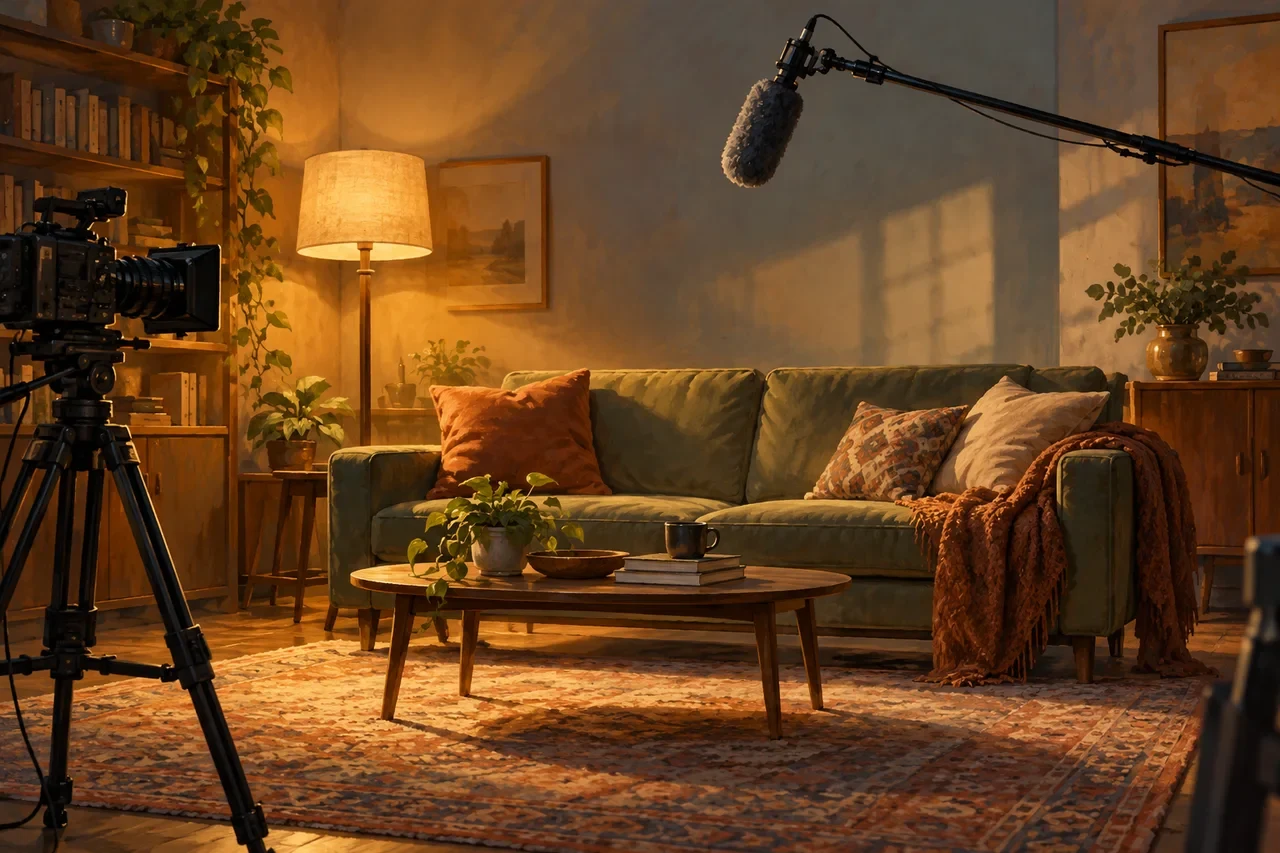
When a film crew asks everyone to stay quiet after a take, the recorder may still be working. The aim is to capture room tone: the low-level sound of the location without intentional dialogue or action. That apparently uneventful recording helps an editor keep the scene sounding continuous.
Silence is not the same as an empty audio track
A dialogue microphone records more than a voice. It can pick up ventilation, distant traffic, electrical hum and the general background of the space. If an editor removes a spoken phrase and leaves a completely empty gap, that background can disappear too. The sudden change may draw attention to the edit.
iZotope's room-tone guide explains how a matching recording can fill those gaps. The goal is usually continuity, not adding an obvious new sound. A pause between sentences can then feel like the same location rather than a brief vacuum.
The recording needs to match the scene
Imagine dialogue recorded beside a softly humming refrigerator. If the crew later captures the room with that appliance switched off and the microphone elsewhere, the result may not match the original takes. The room's name is the same, but the recording conditions have changed.
Keep the relevant microphone setup and room conditions consistent where practical. Ask people to remain quiet without packing equipment, shuffling clothes or whispering. Record a useful stretch and label it clearly by location or setup. The sound team decides how much is needed; a usable uninterrupted recording is more valuable than a nominal duration full of interruptions.
Room tone, ambience and reverberation differ
Room tone is a practical continuity recording. A broader ambience track might deliberately establish a street, forest or busy restaurant. Reverberation describes how sound persists and reflects within a space. These ideas overlap in a finished mix, but they are not interchangeable files.
Adobe's audio guidance describes how ambience creates a sense of presence. An editor might use both the production room tone and additional atmosphere, depending on what the scene requires.
It also helps when cleaning dialogue
A clean sample of background sound can help some noise-reduction tools analyse unwanted noise. That is a separate use from laying tone under an edit, and it is not a reason to remove every trace of the location. iZotope's recording example shows learning a noise profile from a passage without speech.
Processing and reconstructed ambience can help when a recording is missing, but they do not make careful capture pointless. For a small film or interview, listen to an edit once with an empty gap and once with a matching background. The difference explains why a quiet minute on set can save awkward work later.