
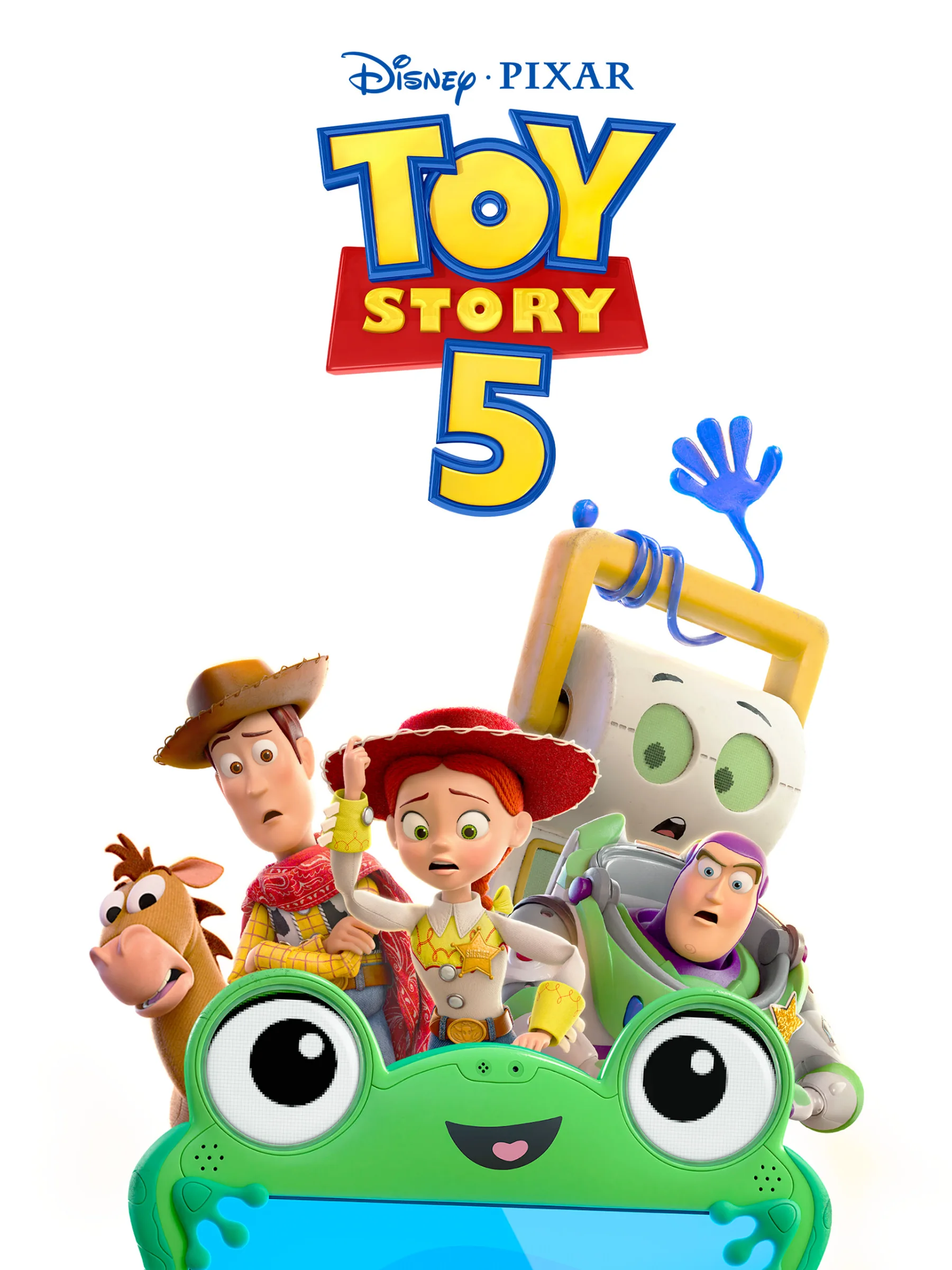
The obvious question hanging over Toy Story 5 is not whether Pixar can make another adventure with these characters. It is whether there is anything left for them to say. Surprisingly, the fifth movie finds a subject that fits this world almost too well: what happens to toys when a glowing screen becomes the most interesting object in the room?
Toy meets tech
Woody, Buzz, Jessie and the familiar group face Lilypad, a tablet voiced by Greta Lee, whose arrival changes Bonnie's relationship with play. It would have been easy to make Lilypad a simplistic villain and turn the movie into a lecture about children spending too much time on devices. The better idea is treating technology as a genuine competitor for attention rather than an evil object.
That makes the toys' anxiety feel recognizable. Their fear has always been obsolescence. First it was a newer toy, then growing up, then abandonment. A tablet is simply the latest version of the same existential problem.
Familiar characters, a contemporary problem
There is comfort in hearing Tom Hanks, Tim Allen and Joan Cusack return to these roles, and Pixar knows exactly how to use that familiarity. The danger is that nostalgia can become a substitute for discovery. The movie occasionally leans on affection we already have rather than creating a completely new emotional bond.
Still, I found the central conflict sharper than I expected. Children do play differently now. The film is at its best when it refuses to pretend the answer is simply going backward. Play changes, childhood changes, and the toys have to decide whether being needed forever was ever a realistic dream.
Does Toy Story need a fifth chapter?
Probably not in the strictest sense. Earlier entries provided endings strong enough to stand permanently. But necessity is a strange test for a movie. What matters is whether the new chapter has an idea, and this one does.
The screen is a clever rival because it cannot simply be defeated
Previous Toy Story antagonists could be escaped, exposed or emotionally understood. Technology is different. Bonnie cannot defeat a tablet because the tablet is not really the problem. It represents a genuine change in how children divide their attention, communicate and play. That makes the conflict more interesting than a simple good-toy-versus-bad-device story.
Pixar is most thoughtful when it allows the toys to misunderstand that distinction. From their perspective, attention is survival. If Bonnie no longer reaches for them, the change feels existential. From Bonnie's perspective, however, nothing so dramatic has happened. She is simply discovering another kind of entertainment. The emotional gap between those perspectives is classic Toy Story territory.
Familiarity is both comfort and limitation
The film knows exactly what a familiar voice, musical cue or visual callback can do to an audience that has lived with these characters for decades. Most of those moments are earned, but nostalgia is powerful enough to hide thin material if a sequel is not careful. The best scenes here use our history with the toys to ask a new question instead of merely reminding us that the history exists.
That is ultimately why the fifth film justifies itself more than I expected. It does not pretend childhood has remained frozen since 1995. It lets the toys confront a world that has moved on again.
Verdict
Toy Story 5 cannot recreate the shock of meeting these characters for the first time, and it wisely does not try. Instead, it takes the franchise's oldest fear — being left behind — and updates the object doing the leaving. I went in wondering why these toys were back. The movie's answer is simple: because the world around them changed again.