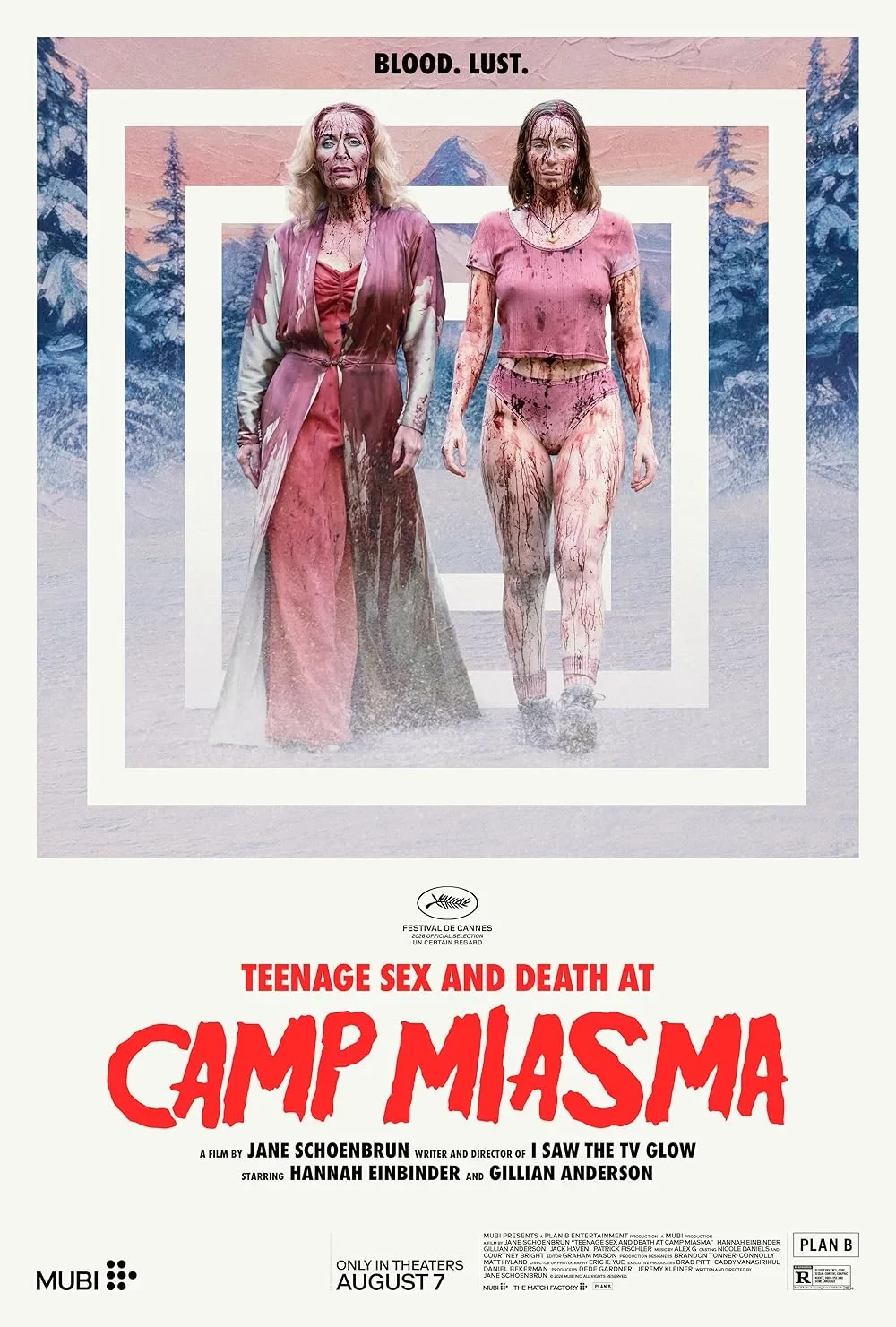
Teenage Sex and Death at Camp Miasma is not a nostalgic slasher tribute with a clever coat of paint. It is a film about what fandom asks people to surrender, and why surrender can feel like liberation when ordinary life offers only safer, smaller roles.
Spoiler-light review. It discusses the central setup and aesthetic strategy without revealing the film's final movement.
A reboot story that distrusts the reboot
Kris, an eager young filmmaker played by Hannah Einbinder, is handed a decayed slasher property and becomes consumed by the original film's reclusive final girl, Billy. That premise lets Jane Schoenbrun examine franchise revival from both sides: as cynical industry recycling and as a fan's sincere attempt to retrieve something life-changing from disposable culture. The film understands that bad sequels do not erase the private meanings viewers build around an image. Its sharpest question is whether reclaiming that image frees Kris or simply gives the image a new way to possess her.
Gillian Anderson controls the temperature
Anderson's Billy is alluring because certainty never settles around her. Amusement, irritation, theatrical poise and threat can occupy the same pause. Hannah Einbinder answers with nervous velocity: Kris wants to sound like the author of her own desire even as she becomes visibly overwhelmed by it. Their uneven power dynamic is the film's dramatic engine. The attraction is not separated from mentorship, exploitation or performance; every exchange keeps changing which of those stories is in control.
Slasher grammar becomes a language of longing
Schoenbrun treats familiar horror devices as emotional tools rather than trivia. Masks, cabins, projected film and the iconography of the final girl carry accumulated cultural memory, but the movie does not stop to congratulate viewers for recognizing them. Camp, erotic charge and violence blur the line between watching a fantasy and entering it. The maximalist style can be intoxicating: color, music and shifts in reality create the sensation that an old movie has leaked beyond its frame.
The risk of maximalism
The film's freedom is also its limitation. It sometimes prefers a charged gesture to a clean dramatic bridge, and its layers of movie-within-movie mythology can make Kris feel less like a person than an antenna receiving the director's ideas. Viewers expecting the clean escalation and body-count mechanics of a conventional slasher may resist its detours. Yet narrative excess is not accidental decoration here. The movie is arguing that identity and spectatorship are messy, recursive acts, so a perfectly disciplined structure might betray its subject.
More romantic than satirical
Hollywood's reboot culture is an easy target, but Schoenbrun refuses the easy superior laugh. The invented Camp Miasma films may be trash, art, fetish object and portal at once. That generosity is what separates the movie from a reference machine. It takes embarrassing devotion seriously and sees taste not as a ladder but as a place where people practice becoming themselves. The horror comes when that practice demands more than the fan expected to give.
Who should see it
The film suits viewers drawn to queer horror, self-reflexive cinema and performances that trade certainty for tension. It is not the best entry point for audiences seeking a straightforward killer-at-camp story or a restrained visual register. MUBI identifies it as a 112-minute US-Canadian horror-comedy release. It reached US and UK/Ireland cinemas in August 2026; local dates and legal availability vary.
Review at a glance
| Element | Assessment |
|---|---|
| Direction | Sensual, self-reflexive and defiantly maximalist |
| Performances | Anderson's control meets Einbinder's anxious momentum |
| Theme | Fandom as self-creation, surrender and possible trap |
| Reservation | Mythology sometimes outruns character clarity |
Verdict
Camp Miasma is a slasher movie that believes an image can save, seduce and consume the same viewer. Its excess will divide audiences, but the film's conviction turns genre nostalgia into something intimate and unstable rather than merely fashionable.