
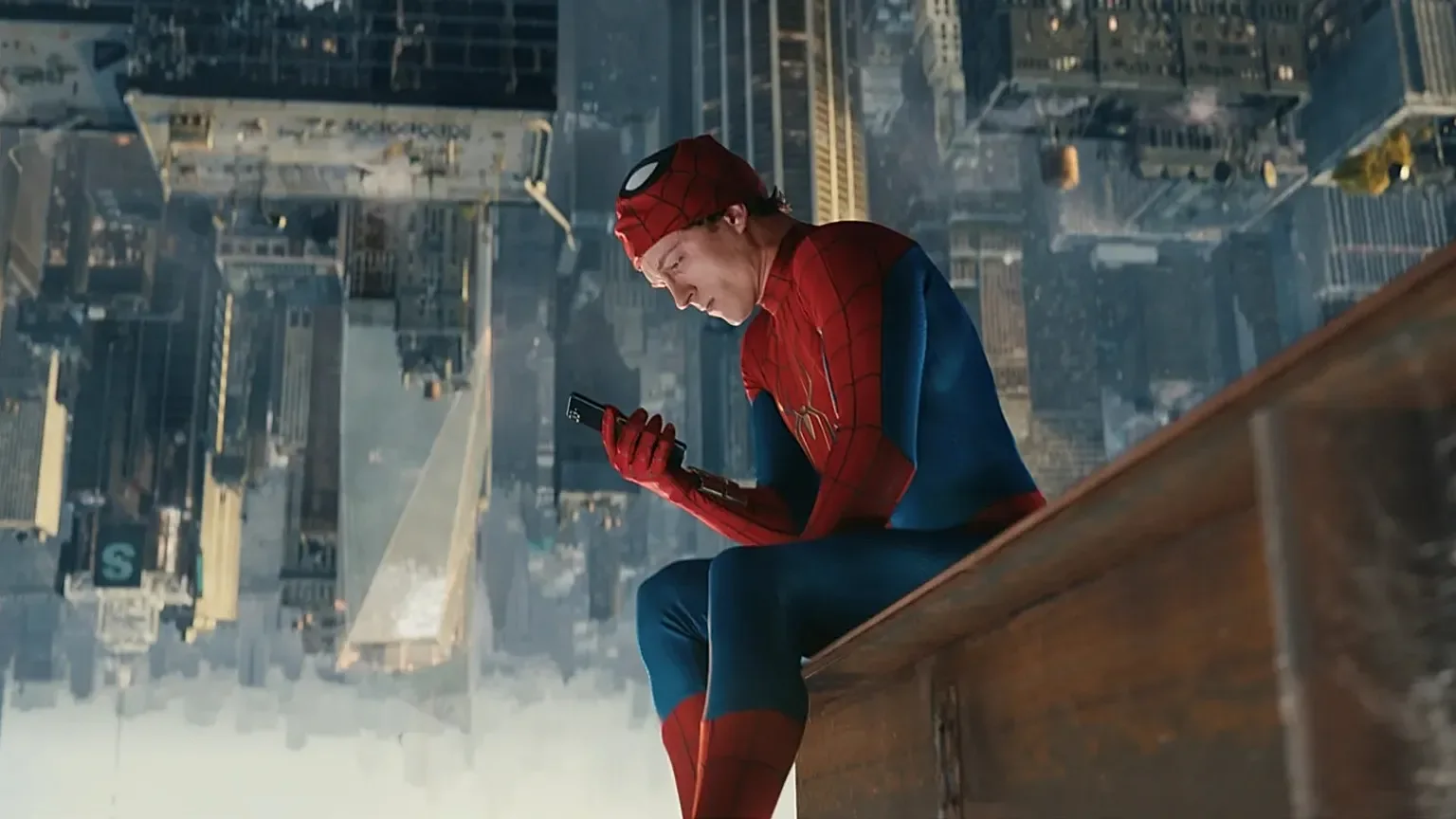
Spider-Man: Brand New Day has a fascinating Peter Parker at its center: older, lonelier and finally carrying the emotional weight that previous movies kept threatening to place on his shoulders. The frustrating part is that the movie around him does not always trust that version of Peter to be enough.
Tom Holland is no longer playing Spider-Boy
Tom Holland has always been naturally likable in the role, but this film asks for something different. Peter's heroism now feels less like an adventure he has stumbled into and more like a responsibility he understands can cost him almost everything. Holland handles that shift without turning Peter into a permanently miserable superhero.
That is where Brand New Day clicked for me. The smaller emotional beats have more impact than some of the enormous action sequences. Director Destin Daniel Cretton can stage spectacle, but the movie is most convincing when Peter is simply trying to work out what kind of person remains after the events that shaped him.
A fresh start with one foot in the MCU machine
The title promises renewal, and parts of the movie genuinely deliver it. There is a more grounded texture here and a welcome interest in the cost of being Spider-Man. Yet the film still carries the familiar Marvel habit of planting pieces for whatever comes next. Every time the story starts to feel satisfyingly self-contained, you can almost hear the larger universe knocking on the door.
I don't object to setup on principle. Comic books have always lived on the promise of another issue. The problem is emphasis. A Spider-Man movie becomes less interesting when Peter Parker starts feeling like connective tissue between future projects.
The length is felt
At roughly two and a half hours, the film has room for character but also stretches several ideas further than they need to go. Some supporting material feels underdeveloped despite the generous runtime. It is a strange contradiction: the movie is long, yet a few of its best ideas still seem rushed.
Peter Parker matters more than the crossover potential
The most compelling idea in this chapter is that Peter cannot simply reset himself because the franchise has entered a new phase. Consequences remain even when costumes, villains and supporting players change. Holland plays that accumulation well. His Peter can still be funny, but the humor increasingly feels like a coping mechanism rather than a permanent state of adolescence.
That is why the quieter material is so valuable. Spider-Man has always worked best when the spectacular problem and the ordinary problem collide. Saving a city means something different when Peter is also worried about work, relationships and whether being a hero has made an ordinary life impossible.
The action is strongest when it reveals character
Cretton has a good eye for movement, and the best set pieces are not merely demonstrations of what Spider-Man can do. They reveal how Peter thinks under pressure. Web-slinging becomes problem solving; agility becomes improvisation. When the action has that character logic, it feels distinctly Spider-Man rather than interchangeable superhero spectacle.
The sequel is therefore caught between two identities. One is an appealingly mature Peter Parker story. The other is a major franchise installment with obligations extending far beyond Peter. The first movie is the one I kept wanting more of.
Verdict
Brand New Day is strongest when it remembers that Spider-Man's superpower has never really been web-slinging. It is Peter's stubborn decision to keep caring when caring hurts. Holland sells that beautifully. I only wish the film were as willing as its hero to leave some baggage behind.