
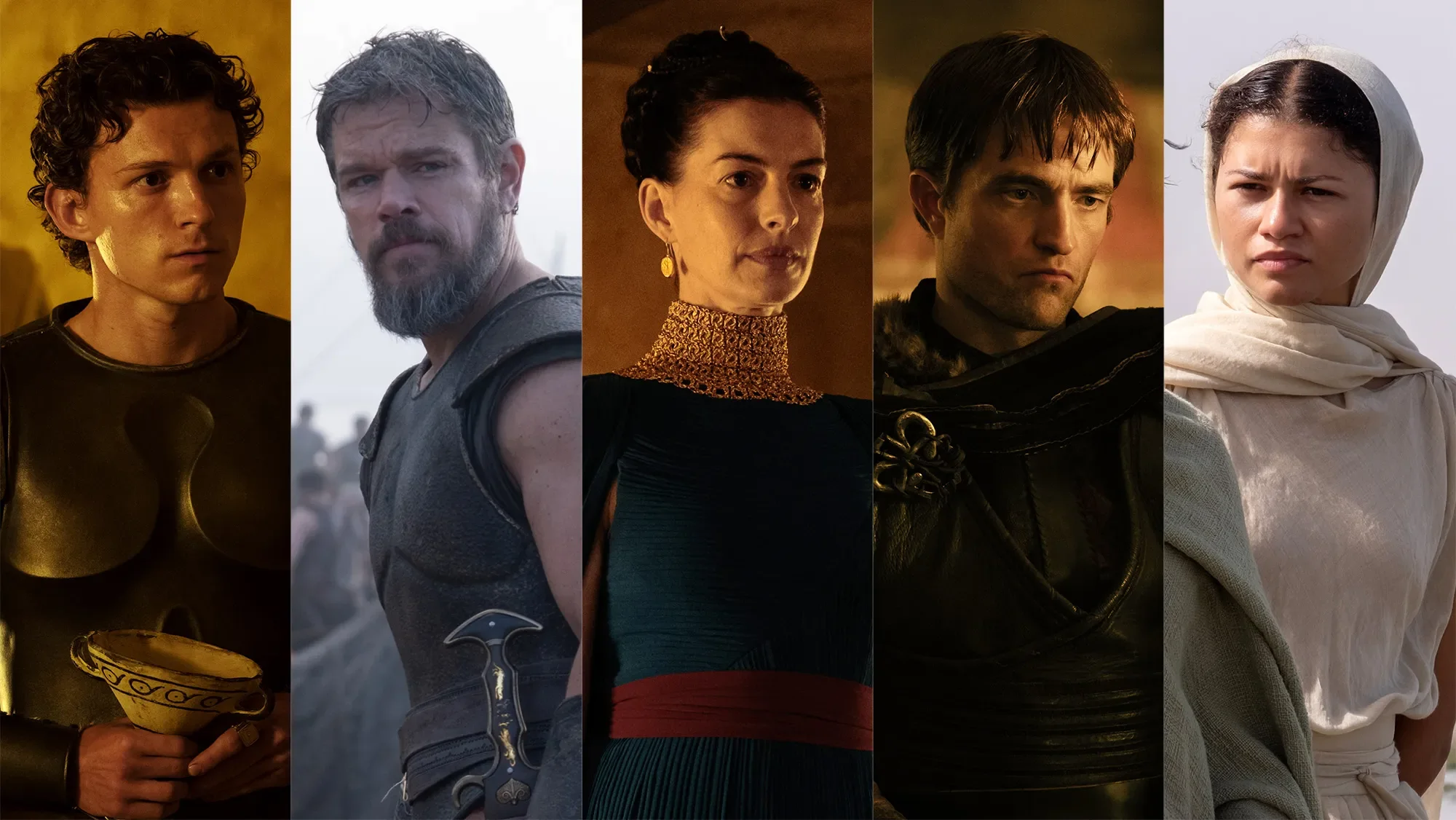
Christopher Nolan opening The Odyssey with an act of storytelling feels almost too perfect. This is, after all, one of the foundational stories about the stories people tell: to survive, to justify themselves, to turn horror into legend and to make the road home mean something.
Nolan finds the human being inside the monument
Matt Damon plays Odysseus not as a marble statue that has somehow learned to speak, but as a man whose intelligence is both his gift and his burden. The scale around him is enormous, yet the film keeps returning to the consequences of choices made by people who have become accustomed to war.
I was prepared for the technical flex. Nolan making Homer was never going to be modest. What surprised me more was how often the spectacle is used to make Odysseus look small. Seas, armies, gods and monsters do not simply decorate his journey; they keep reminding him that cleverness does not equal control.
Nearly three hours, but rarely weightless
At 173 minutes, The Odyssey asks for a serious chunk of your day. There are stretches where Nolan's love of structure and scale can make the experience feel deliberately imposing. But the film earns much of that length by treating the journey as accumulation. Home matters because getting there has changed the person trying to return.
The action is muscular rather than weightless, and the mythic imagery has a physicality that helps keep the film from becoming an expensive illustrated lecture. Nolan is clearly fascinated by how an ancient audience might have felt hearing impossible events described as if they had happened just beyond the horizon.
A story about why stories survive
The most interesting thread, for me, is the film's suspicion of its own hero-making. Who gets remembered as brave? Which brutal act becomes strategy once the right person tells it? The movie does not flatten Homer into a modern morality lesson, but it does keep asking what happens when violence is polished into legend.
Myth without museum glass
The danger in adapting material this old is reverence. Treat Homer as an untouchable monument and the characters stop breathing. Nolan instead approaches the epic as something that was once popular entertainment: frightening, violent, strange and designed to hold an audience. The grandeur remains, but it is not embalmed.
Damon's Odysseus benefits from that approach. His intelligence is practical rather than ornamental. He watches, calculates and invents, yet the film is careful about the cost of always believing there must be a clever solution. Some problems cannot be outsmarted without leaving damage behind.
Scale with a purpose
The large-format imagery is predictably a major part of the experience, but scale here has thematic value. Human beings build stories in order to make themselves feel central, while the natural and supernatural world keeps reducing them to tiny figures. Ships look impressive until the sea decides otherwise. Armies seem permanent until time and violence scatter them.
That tension between human ambition and human smallness gives the spectacle weight. The movie is not simply asking whether Odysseus can return home. It keeps asking what home can mean after years spent becoming someone capable of surviving everything between here and there.
Verdict
The Odyssey is huge because the material calls for hugeness, not simply because Nolan has the resources to provide it. Beneath the ships, battles and mythological terror is a surprisingly intimate question: after becoming the hero of everybody else's story, can Odysseus still find the person who left home? That is the part that stayed with me after the spectacle faded.